

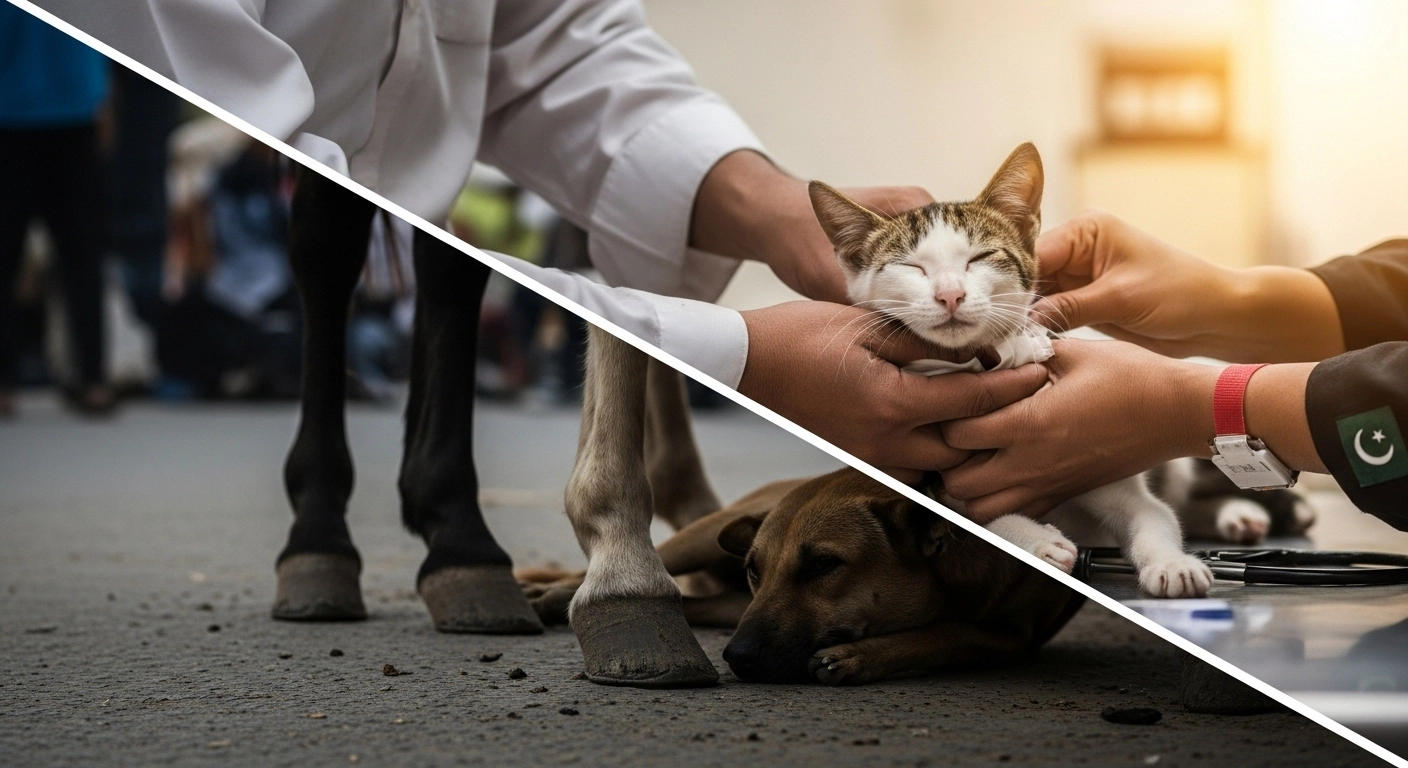
Animal welfare is an emerging topic in Pakistan, spurred by increasing public awareness and the tireless work of grassroots organizations. While cultural and religious traditions advocate for kindness toward animals, the practical reality presents significant challenges stemming from outdated laws, limited public education, and insufficient institutional support.1 Nevertheless, recent legislative reforms and the growing activism of Non-Governmental Organizations (NGOs) point toward tangible opportunities for a more compassionate future.
Major Challenges to Animal Welfare
The state of animal welfare in Pakistan is hindered by several interconnected systemic issues that affect companion animals, strays, working animals, and wildlife.
⚠️ Key Obstacles Holding Back Animal Welfare
- 📜 Outdated laws (1890 Act) with weak penalties
- 😔 Low public awareness & inhumane culling practices
- 🏥 Shortage of vets, shelters, and government support
- 🦓 Neglect of wildlife & zoo animals
1. Antiquated and Weak Legal Framework
The primary legislation governing animal cruelty in Pakistan is the Prevention of Cruelty to Animals Act of 1890, a relic of the colonial era.2
- Outdated Provisions: The Act’s provisions are severely outdated and fail to incorporate modern scientific understanding of animal sentience.3
- Nominal Penalties: Cruelty offenses often result in only minimal fines, which are ineffective as a deterrent against serious abuse and neglect.
- Weak Enforcement: There is a pronounced lack of implementation and enforcement mechanisms.4 The institutions responsible, like the Society for the Prevention of Cruelty to Animals (SPCA), are often under-resourced and lack the necessary authority and funding for effective action across the provinces.5
2. Low Public Awareness and Misinformation
A significant portion of the population lacks awareness regarding animal rights, responsible pet ownership, and the link between animal welfare and public health.
- Societal Attitudes: Public attitudes, particularly towards stray animals, are often unsympathetic, with dogs and cats frequently viewed as pests, leading to inhumane culling practices like poisoning or shooting by municipal authorities.6
- Misinformation and Abandonment: Cases of pet abandonment and abuse, such as those seen during the COVID-19 pandemic, are exacerbated by misinformation and economic pressure on families.7
- Working Animals’ Plight: Animals used for labor, such as donkeys and horses, frequently suffer from overwork, malnourishment, and lack of veterinary care, particularly in rural areas where their owners are daily wage earners struggling financially.8
3. Insufficient Institutional Support and Resources9
The sheer scale of animal suffering often overwhelms the limited resources dedicated to welfare.10
- Veterinary Shortage: Pakistan has a shortage of veterinary professionals and facilities, making accessible medical care for strays and working animals scarce.11
- Shelter Overload: Existing animal shelters and rescue organizations are overwhelmed by the volume of cruelty and abandonment cases, and they largely operate on private donations with minimal government collaboration or funding.
- Zoo and Wildlife Issues: Wildlife and zoo animals face neglect due to insufficient regulation and poor management, a problem that has gained international attention.
Opportunities for Improvement and Positive Change
Despite the challenges, a rising wave of activism and certain policy shifts present key opportunities to elevate animal welfare standards in Pakistan.12
🌱 Seeds of Change Are Growing
From stronger laws to grassroots activism and global partnerships, Pakistan is seeing a shift toward compassion. Each small step fuels a bigger transformation.
🌍 See Path to Change →1. Legislative Reform and Stricter Laws
The most critical opportunity lies in modernizing the legal framework.
- Recent Amendments: There has been movement toward reform, notably amendments introduced in 2022/2023 to increase penalties for animal cruelty and ban animal testing, signaling an intent to align with global standards.13
- Dedicated Authority: Establishing a national-level animal welfare authority is a necessary step to ensure better coordination, policy implementation, and consistent enforcement of laws across all provinces.14
- Species-Specific Standards: Future legislation needs to introduce species-specific welfare standards for farm animals, transport, and slaughter to address the unique needs of different animal groups.15
2. The Pivotal Role of NGOs and Grassroots Activism
NGOs and local animal rights groups are the driving force behind practical welfare work and advocacy.16
- Rescue, Rehab, and Advocacy: Organizations like the Ayesha Chundrigar Foundation (ACF Animal Rescue), Pakistan Animal Welfare Society (PAWS), and Todd’s Welfare Society (TWS) are instrumental in rescue operations, providing veterinary care, and raising crucial funds.
- Humane Population Control: Activists strongly advocate for and implement Trap, Neuter, Release (TNR) programs as a humane and effective alternative to culling for controlling stray dog and cat populations, which also combats the spread of rabies.17
- International Collaboration: Partnerships with international NGOs like Brooke Pakistan (focused on working equines) and World Animal Protection can bring in technical expertise, funding, and global best practices to scale up local efforts.
3. Public Awareness and Education
Long-term change requires a fundamental shift in societal attitudes, which can be achieved through targeted education.18
- Inclusion in Curricula: Incorporating animal welfare education into school curricula for all age groups is essential for fostering empathy and responsible behavior from a young age.19
- Responsible Pet Care Awareness: Campaigns focused on responsible pet care awareness can educate the public on the long-term commitment of pet ownership, the need for timely vaccinations and sterilization, and dispelling myths that lead to abandonment.20
- Media Influence: The growing influence of social media and local media is being used effectively by activists to highlight abuse, mobilize support for rescue efforts, and advocate for stronger animal protection.21
4. Integrating Animal Health into “One Health”
Recognizing the intersection of animal health, human health, and the environment—the “One Health” approach—is a vital opportunity.
- Investment in Veterinary Services: Strengthening the underfunded animal health sector, including increasing the number of veterinarians and improving access to medicines, is crucial for both public health and the welfare of livestock and companion animals.
- Disease Prevention: Better animal health services will help combat disease outbreaks and antimicrobial resistance (AMR), which pose risks to both animals and humans.
In conclusion, while animal welfare in Pakistan faces the deep-seated hurdles of archaic legislation and widespread indifference, the momentum generated by dedicated NGOs and recent political will to reform laws offers a clear pathway forward. By prioritizing comprehensive legal reform, bolstering institutional capacity, and investing heavily in public education and the “One Health” approach, Pakistan can move toward a future that honors its cultural and religious principles of compassion for all sentient beings.