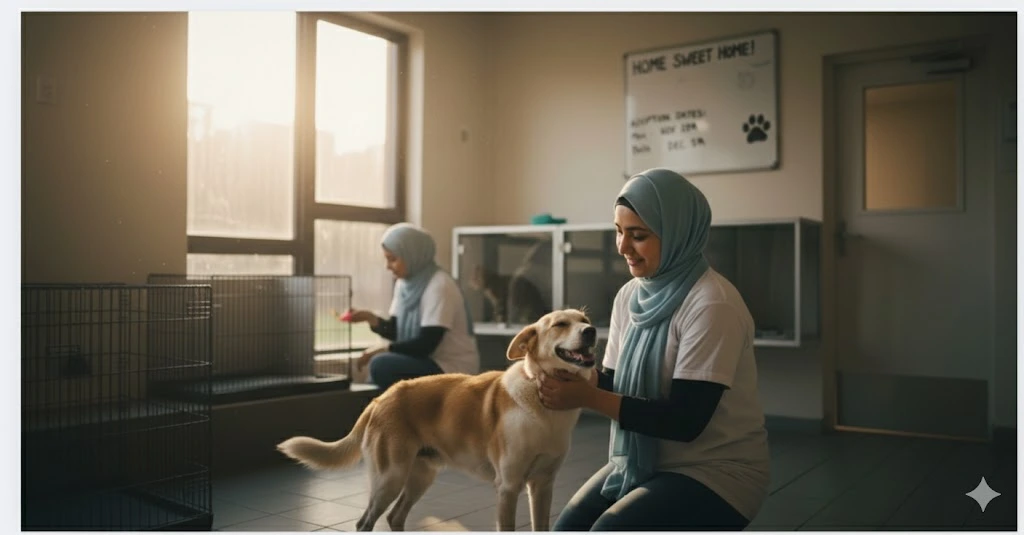

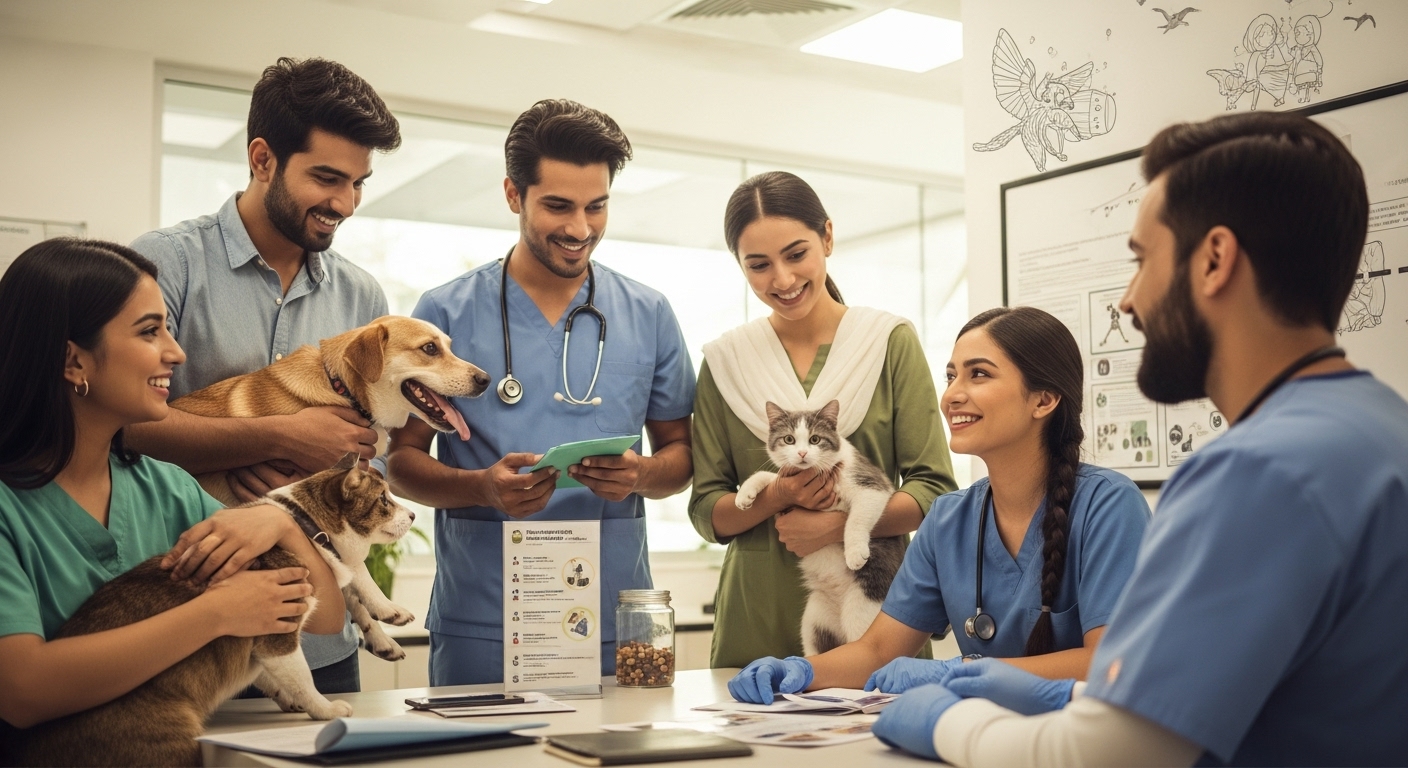
The common view of an animal hospital is a place for sutures, vaccines, and emergency surgery—a necessary service for pet owners. While this is true, it only scratches the surface. In reality, these institutions are not just centers for veterinary medicine; they are crucibles of empathy and essential pillars in the construction of a truly compassionate human society. Their work extends far beyond treating illness, subtly but powerfully shaping our ethical framework and defining our capacity for care.
1. Modeling Unconditional Care and Empathy
At their core, animal hospitals operate on the principle of unconditional care. A sick or injured animal, regardless of species, socioeconomic status of the owner, or prior behavior, is met with the same dedication to healing. This constant, daily practice of putting the needs of a vulnerable, non-verbal being first is a powerful lesson for the community.
1.1 Core Principle: Care Without Preconditions
Animal hospitals practice a simple but radical ethic: treat the patient in front of you, regardless of species, cost, backstory, or temperament. This normalizes three community-wide habits:
- Non-transactional regard: Help isn’t conditional on an animal’s “usefulness.”
- Needs-first triage: The most vulnerable get attention first, modeling fairness under pressure.
- Moral consistency: Compassion expressed for non-human life strengthens norms for human care.
🧠 Compassion Readiness Quiz
1.2 Valuing the Vulnerable
- Dignity over productivity: Teams routinely advocate for patients that cannot argue, pay, or “earn” care. That re-centers value around sentience and suffering, not status.
- Portable ethic: The logic that protects a limping stray maps cleanly to human rights, disability justice, and elder care—where voice and power are often limited.
- Micro-rituals of respect: Pain scoring, gentle handling, low-stress restraint, and consent-like cues (e.g., pause-and-assess) train staff and clients to read vulnerability and respond skillfully.
1.3 The Human–Animal Bond as Public Health
- Stability buffer: Preserving bonds reduces owner stress, loneliness, and healthcare utilization.
- Grief literacy: Clinics coach families through anticipatory grief and loss—skills that generalize to human bereavement and caretaking.
- Prosocial contagion: Children witnessing calm, competent animal care internalize empathy scripts earlier and more durably than from abstract lessons.
1.4 Operational Practices That Teach Empathy (Quietly)
- Transparent estimates & options: Presenting tiers of care (gold/standard/palliative) with risks and benefits cultivates informed, values-aligned decisions rather than guilt or shame.
- Fear Free / low-stress handling: Design choices (pheromones, separate entrances, quiet zones) model environmental empathy—engineering spaces to reduce distress.
- Ethics rounds & case debriefs: Staff learn to reason about interests, quality of life, and uncertainty—building moral muscles the community can see and learn from.
- Community-facing communication: Clear discharge notes, teach-back methods, and accessible language model respectful, inclusive education.
1.5 Spillover to Human Care Systems
- Triage discipline: Vet ER workflows (ABCDE, color-coded urgency) are system templates for disaster shelters and community clinics.
- Equity protocols: Funds (angel funds, pay-it-forward, sliding scales) normalize solidarity mechanisms that civic orgs can copy.
- Consent culture: Normalizing “stop signals” from non-verbal beings strengthens consent sensitivity with children, elders, and people with communication differences.
1.6 A Vignette (Composite, De-identified)
A frightened, reactive dog arrives after a car strike with an owner who can’t cover full costs. The team separates pain relief from payment, stabilizes first, then walks the owner through three care paths, including a subsidized plan and a humane palliative option if prognosis worsens. The owner learns how to decide, not just what to buy. The neighborhood learns that care is principled, not purchasable.
💚 Quick Pulse: What Does Compassion Mean to You?
Animal hospitals model care without preconditions. But how do you see it?
1.7 What “Good” Looks Like (Observable Markers)
- Published care tiers and hardship policies
- Documented pain scores and low-stress handling metrics
- Regular ethics huddles with action items
- Client education artifacts: discharge guides, visuals, multilingual handouts
- Feedback loops: owner-reported empathy scores; follow-up call completion rates
1.8 Common Objections & Replies
- “It’s just about pets.”
Reply: The skills—pain recognition, consent cues, ethical triage—are domain-agnostic and transfer to human systems. - “Empathy slows throughput.”
Reply: Low-stress handling reduces restraint injuries, sedation use, and readmissions—efficiency via compassion. - “Subsidies invite overuse.”
Reply: Tiered access with clear criteria + brief financial counseling targets need without moralizing.
1.9 Policy & Industry Implications
- Encourage public–private hardship funds tied to measurable welfare outcomes.
- Incentivize Fear Free design grants for clinics in high-stress catchment areas.
- Integrate ethics & communication modules into licensure CE with community reporting.
1.10 Practical Playbook (Copy/Paste Ready)
- Post a Care Philosophy one-pager in reception (values, triage, hardship options).
- Standardize a 3-tier plan template with risks/benefits and a decision grid.
- Implement 48-hour empathy callbacks for complex cases.
- Track and publish quarterly empathy metrics (pain scoring rates, owner teach-back success).
- Host “empathy open houses”: 45-minute demos of handling, pain signs, and at-home recovery.
2. Educating for Responsible Stewardship
Animal hospitals do more than heal; they teach. Every clinic, exam room, and waiting area doubles as a classroom where society quietly learns what it means to accept responsibility for other living beings. This function—education through care—is as vital as the medicine itself.
2.1 From Passive Affection to Active Stewardship
Most people “love animals,” but stewardship requires more than affection—it requires knowledge, foresight, and discipline. Veterinary professionals guide communities from sentiment into structured responsibility, showing that genuine compassion is not just about how we feel, but how we act.
- Cultural shift: Moving from “pets as property” to “animals as family members.”
- Reinforced accountability: Owners learn that care isn’t occasional—it’s a lifelong contract.
- Role modeling: Children exposed to veterinary teaching internalize that compassion is a duty, not a luxury.
2.2 Proactive Health and Welfare
Animal hospitals embody prevention as compassion. They frame care as ongoing investment, not crisis response.
- Preventative medicine: Routine check-ups, parasite control, and vaccinations reinforce the lesson that real care means anticipating suffering before it arrives.
- Nutrition literacy: Clinics debunk fad diets and teach species-appropriate nutrition, underscoring that compassion isn’t indulgence—it’s discipline in daily choices.
- Behavioral health: Guidance on enrichment, socialization, and exercise extends stewardship into the realm of mental well-being, reminding owners that flourishing is more than survival.
💰 Pet Wellness Cost Estimator
2.3 Population Control and Public Health
Animal hospitals stand at the intersection of individual welfare and collective health.
- Spay/neuter initiatives: Beyond reducing shelter overcrowding, these programs prevent silent epidemics of suffering—millions of unwanted litters, many condemned to neglect.
- Zoonotic disease mitigation: Vaccinations for rabies, distemper, and leptospirosis protect both pets and humans, showing how caring for animals fortifies public safety.
- Community resilience: By educating about bite prevention, parasite control, and hygiene, hospitals reduce risks across neighborhoods, teaching that stewardship radiates outward.
2.4 Setting Ethical Standards
Perhaps the most profound education happens in the exam room moments of moral weight.
- End-of-life care: Veterinarians routinely guide owners through decisions about suffering, dignity, and release. This cultivates community-wide literacy in grief management and ethical decision-making.
- Transparent communication: Honest discussions about prognosis, costs, and quality of life normalize clarity without cruelty—a standard human healthcare often struggles to match.
- Moral consistency training: By showing that every life stage deserves dignity—from playful youth to fragile old age—clinics embed respect for mortality into cultural practice.
2.5 Expanding Impact Through Community Education
- Workshops & outreach: Many hospitals offer school programs, adoption counseling, and behavior classes, seeding compassion in the next generation.
- Client-facing media: Blogs, newsletters, and social posts act as micro-lectures on responsibility, accessible far beyond the clinic walls.
- Role as trusted source: In a landscape of online misinformation, veterinarians anchor communities with evidence-based empathy.
2.6 A Playbook for Responsible Stewardship
- Standardize “Wellness Plans” that bundle vaccines, exams, and education into accessible packages.
- Partner with shelters and rescues for joint spay/neuter and vaccination drives.
- Train staff in narrative medicine—using storytelling to help clients understand complex ethical issues.
- Embed life-stage education (puppy/kitten → adult → senior) into every appointment.
- Publish annual “Community Compassion Reports” summarizing outreach, population control, and preventative successes.
3. Extending the Circle of Compassion to Wildlife and the Underprivileged
Animal hospitals do not stop at pets with loving homes. Their work radiates outward, pulling marginalized beings—wildlife, the poor, the displaced—into the circle of care. In doing so, they challenge the community to expand empathy from personal to planetary, from owned to overlooked.
3.1 Wildlife Rehabilitation: Healing the Unclaimed
Every injured bird, fox, or turtle treated by a hospital symbolizes a collective responsibility for the ecosystems we impact.
- Human accountability: Many wildlife injuries—window strikes, vehicle collisions, pollution—are anthropogenic. Treating these animals is a tacit admission of our debt to the natural world.
- Ecological literacy: Clinics often collaborate with conservation groups, educating the public on species roles (e.g., raptors controlling rodent populations, pollinators sustaining crops).
- Emotional education: When a child sees a wild owl rehabilitated and released, they internalize stewardship beyond ownership—care without personal benefit.
3.2 Veterinary Outreach and Charity: Care Beyond Wealth
Animal hospitals increasingly serve as safety nets for the most vulnerable humans by caring for their animals.
- Homeless populations: For many living unhoused, pets are lifelines of loyalty, protection, and emotional stability. Providing medical care preserves not just animal health but human dignity.
- Domestic violence survivors: Clinics partnering with shelters ensure that leaving an abuser does not mean leaving behind a beloved pet—a barrier that keeps many victims trapped.
- Low-income families: Subsidized or pay-what-you-can clinics keep pets healthy while reducing cycles of neglect → surrender → shelter overload.
This is compassion in its most integrative form: helping animals sustains the humans who rely on them most.
3.3 Disaster Response: Hospitals as Resilience Anchors
During crises, veterinary facilities transform into lifelines for community continuity.
- Natural disasters: Hurricanes, floods, wildfires—clinics become triage centers for displaced pets and livestock, ensuring families can reunite safely.
- Pandemics: Veterinary staff maintained essential services during COVID-19, balancing zoonotic risk management with the psychological stability pets provide.
- Preparedness role: Animal hospitals often coordinate microchip drives, vaccination blitzes, and supply distribution, reinforcing that resilient communities plan for every lifeform.
🌍 Did You Know?
3.4 Shaping an Expanded Moral Framework
By embracing the unowned and the underserved, animal hospitals press society toward a larger definition of “us.”
- From anthropocentrism to ecocentrism: Caring for wildlife makes humans recognize their role as participants, not masters, of ecosystems.
- From wealth-based access to equity: Outreach and charity remind us that care is a right of the vulnerable, not a privilege of the wealthy.
- From crisis reactivity to resilience: Disaster response reframes empathy as a strategic community investment, not just a private feeling.
3.5 Practical Playbook for Extending Compassion
- Formalize wildlife triage protocols and publicize local hotlines.
- Partner with social service agencies to integrate pet care into programs for homelessness and domestic violence.
- Establish community emergency coalitions linking vet clinics, shelters, and civic disaster management.
- Launch “Compassion Scholarships” (free care days for financially stressed families).
- Report impact with annual community equity dashboards: animals treated, families kept together, wildlife released.
3.6 A Transformative Example (Composite)
After a hurricane, an animal hospital sets up an emergency tent. Staff treat dehydrated cats, stabilize livestock, and microchip displaced dogs so families can be reunited weeks later. Alongside the medical aid, the clinic distributes food to both pets and owners, blurring the artificial line between “animal aid” and “human aid.” The message is clear: resilience is shared, and compassion is indivisible.
The Societal Mirror
Ultimately, the sophisticated, dedicated, and often financially sacrificial work performed in animal hospitals is a mirror reflecting our highest ideals. It is a constant, tangible reminder that empathy is not an abstract concept but a practiced skill—one that grows stronger every time a sterile room is filled with hope for a non-human life.
A society that invests in the health and well-being of animals, providing state-of-the-art care and ethical guardianship, is demonstrating its own moral maturity. Animal hospitals, therefore, are not just medical facilities; they are foundational institutions that teach us, day in and day out, how to be better humans.
“Animal hospitals are not only medical facilities—they are mirrors of our highest ideals, teaching us daily how to be better humans.”
When we invest in the well-being of animals, we demonstrate the moral maturity of our society. Compassion is indivisible.
🌟 Discover Our Ethics in Action →What aspects of veterinary outreach in your community do you think most effectively promote compassion beyond just pet owners?